 TheEveBot | Robotic Solutions & Commercial Equipment
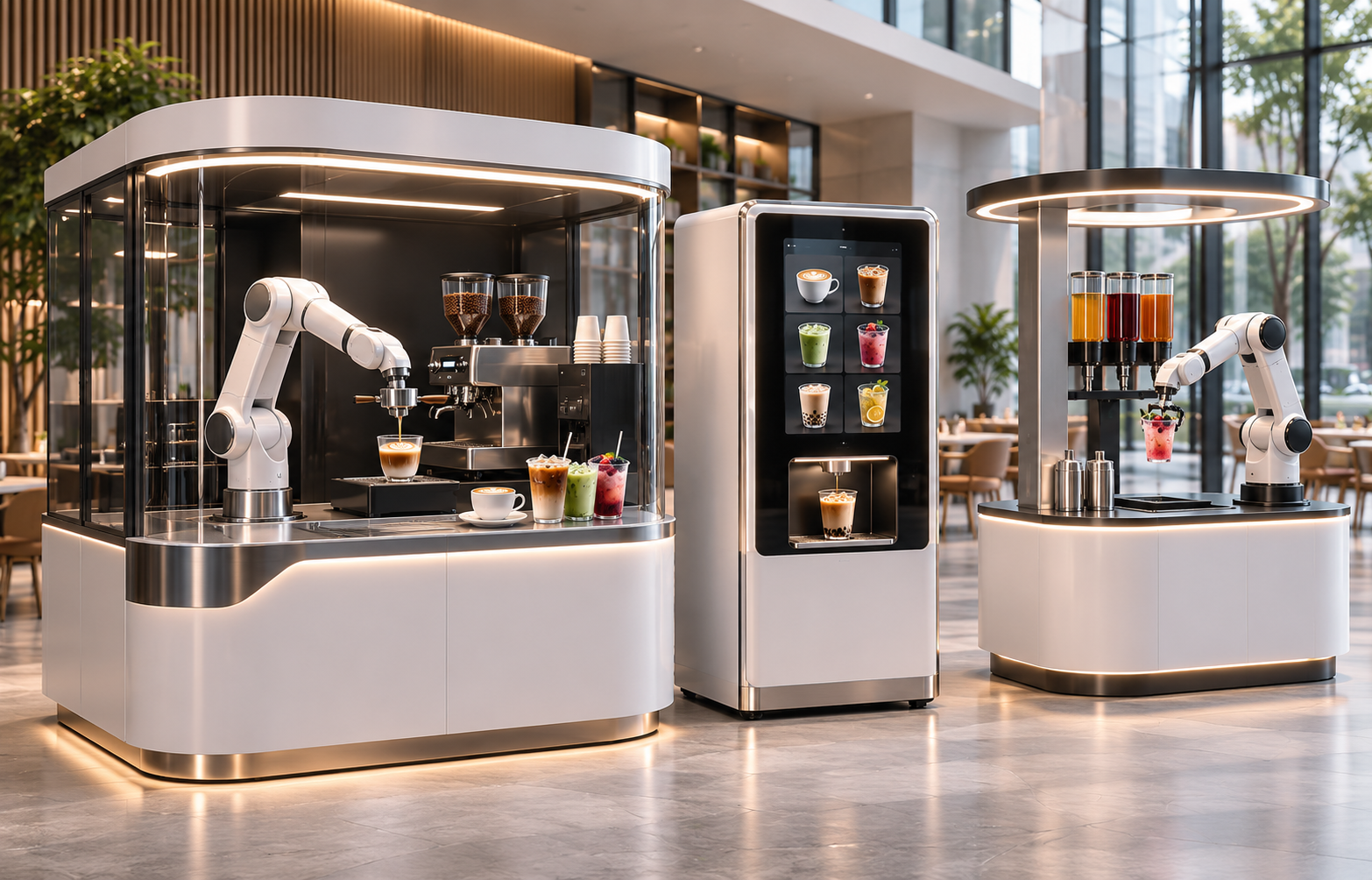
Artificial intelligence, robotics, and smart vending technology are transforming how businesses serve food and beverages. From automated coffee kiosks to robotic beverage stations, a new generation of self-service machines is creating opportunities for commercial retail, hospitality, transportation, and entertainment venues.
Unlike traditional vending machines, advanced robotic systems can combine automated preparation, digital payments, remote monitoring, and interactive customer experiences in a single installation.
An AI robotic vending machine is an automated retail system that can prepare or dispense products with minimal staff involvement, using robotics, sensors, software, and, in some configurations, AI-powered decision-making.
For business owners and commercial buyers, the important question is not simply whether robotic vending technology looks impressive. It is whether the equipment can deliver consistent service, reliable operation, and sustainable commercial value.
This guide explains the technology, applications, benefits, costs, and purchasing considerations for AI robotic vending machines in 2026.
What Is an AI Robotic Vending Machine?
An AI robotic vending machine is a self-service retail system that uses automated mechanisms and digital technology to deliver products or freshly prepared beverages.
Depending on the configuration, these systems may include:
- Robotic arms for beverage preparation and product handling
- Touchscreen ordering interfaces
- Cashless and contactless payment systems
- Automated coffee brewing or beverage mixing
- Inventory monitoring and remote diagnostics
- Cameras and sensors for operational monitoring
- AI-assisted analytics or maintenance alerts
Importantly, not every automated vending machine uses artificial intelligence.
A basic vending machine may rely entirely on predefined mechanical sequences. An AI-enabled system may use additional software to analyze operating patterns, recognize certain conditions, or assist with forecasting and support.
Buyers should ask suppliers to demonstrate precisely which capabilities are AI-powered.
How Do Robotic Vending Machines Work?
A typical automated beverage vending process involves six stages.
Step 1: Customer Places an Order
Customers choose products or beverages through a touchscreen, mobile interface, or another supported ordering system.
Menu customization may include beverage size, flavor, sweetness, temperature, and additional ingredients.
Step 2: Digital Payment
The system processes payment through its supported payment gateway.
Payment options vary by model, destination country, and payment provider.
Step 3: Automated Preparation
The machine receives the order and activates its preparation equipment.
A robotic coffee kiosk may grind coffee beans, brew espresso, dispense milk, and move cups using automated mechanisms.
Other systems may prepare tea, flavored beverages, or mixed drinks.
Step 4: Robotic Handling
Where a robotic arm is installed, it can transfer cups or perform selected preparation and presentation tasks.
This feature may create an engaging visual experience for customers in busy commercial locations.
Step 5: Product Collection
After preparation, the machine delivers the finished beverage to a designated collection area.
Appropriate guarding, sensors, and access controls help separate customers from moving machinery.
Step 6: Remote Monitoring and Maintenance
Connected systems may report sales activity, ingredient levels, machine faults, and operational status to a management dashboard.
However, remote monitoring does not eliminate the need for physical cleaning, restocking, or equipment servicing.
Main Types of Robotic Vending Machines
1. AI Robotic Coffee Kiosks
Robotic coffee kiosks are designed to automate parts or all of the coffee preparation and serving process.
Depending on the system, they may support:
- Espresso
- Americano
- Cappuccino
- Latte
- Flavored coffee beverages
- Hot and cold coffee options
Some robotic coffee systems feature visible robotic arms, creating a distinctive customer experience.
Best for: Shopping malls, airports, office buildings, universities, hotels, and other high-traffic locations.
2. Automated Coffee Vending Machines
Automated coffee vending machines typically use integrated brewing and dispensing mechanisms without a visible robotic arm.
They may offer a compact footprint and a more conventional customer experience.
Best for: Offices, hospitals, schools, transportation facilities, and self-service retail locations.
3. Robotic Beverage Vending Systems
Automated beverage systems can be configured for selected drink categories such as milk tea, flavored beverages, or specialty refreshment products.
Ingredient compatibility, refrigeration, recipes, and preparation capabilities depend on the machine design.
Best for: Shopping centers, entertainment venues, beverage chains, and commercial franchise operations.
4. Robotic Food and Dessert Vending Machines
Some robotic retail systems automate the preparation or dispensing of desserts, snacks, frozen products, and other food items.
Because food handling requirements vary significantly, commercial buyers should verify the exact food categories supported by the equipment.
Best for: Entertainment centers, transport hubs, food courts, and hospitality venues.
Robotic Coffee Kiosk vs. Traditional Vending Machine
| Feature | Robotic Coffee Kiosk | Traditional Vending Machine |
|---|---|---|
| Core function | Fresh beverage preparation | Dispensing stored products |
| Robotic arm | Available on selected models | Usually not included |
| Customer interaction | Touchscreen and optional robotic demonstration | Standard selection interface |
| Customization | Model-dependent drink customization | Often more limited |
| Maintenance | Cleaning, restocking, technical servicing | Restocking and equipment servicing |
| Installation | May require additional utilities and space | Depends on product type |
| Ideal use | Premium beverage retail | Convenience-oriented retail |
Neither solution is universally better.
Businesses should select equipment based on customer demand, location, maintenance capabilities, investment budget, and desired service experience.
Seven Benefits of AI Robotic Vending Machines
1. Extended Service Hours
Automated systems can help businesses serve customers outside conventional staffing hours.
However, actual operating availability depends on site access, cleaning schedules, ingredient replenishment, and equipment reliability.
2. More Consistent Preparation
Automation can standardize selected preparation steps and reduce variation between beverage servings.
Recipe consistency still depends on ingredient quality, machine calibration, maintenance, and correct operating procedures.
3. Reduced Routine Labor Requirements
A robotic system may reduce the amount of staff time required for taking orders and preparing individual drinks.
Staff or service partners are still needed for replenishment, cleaning, technical maintenance, customer support, and operational management.
4. Customer Engagement
Visible robotic arms, automated preparation, and interactive interfaces can make the purchasing experience more memorable.
This may be particularly valuable in shopping malls, exhibitions, tourist destinations, and branded retail environments.
5. Remote Business Management
Connected systems can help operators review sales data, monitor ingredient consumption, and receive equipment notifications.
Actual software functionality should be confirmed before purchase.
6. Flexible Commercial Deployment
Robotic vending solutions may be suitable for locations where a conventional staffed café is impractical.
Installation requirements vary by machine size, utility connections, electrical capacity, and local regulations.
7. Opportunities for Business Expansion
Automated retail may enable businesses to test new locations or develop additional sales channels.
The commercial outcome depends on demand, installation costs, product margins, maintenance expenses, and other factors.
Where Can AI Robotic Vending Machines Be Installed?
Shopping Malls and Retail Centers
Automated coffee or beverage kiosks can provide convenient refreshments while creating an interactive attraction for shoppers.
Airports and Transportation Hubs
Self-service beverage equipment may support travelers during early mornings, late evenings, and other periods when conventional food service is limited.
Hotels and Hospitality Properties
Robotic coffee stations may complement lobby cafés, business lounges, and other guest-service areas.
Corporate Offices
Automated beverage systems can provide staff and visitors with access to refreshments without requiring a dedicated barista at every location.
Universities and Hospitals
These locations may benefit from extended service hours, although accessibility, cleaning, ingredient management, and site approval remain important.
Exhibitions and Entertainment Venues
Robotic beverage preparation may become part of an interactive brand activation or event experience.
How Much Does an AI Robotic Vending Machine Cost?
The price of a robotic vending machine varies significantly depending on the level of automation, robotic hardware, beverage capabilities, software, and installation requirements.
A basic automated beverage vending machine and a fully enclosed robotic coffee kiosk are different equipment categories and should not be compared on purchase price alone.
Commercial buyers should request a detailed quotation covering:
- Equipment purchase price
- Robotic arm and automation configuration
- Payment integration
- Software licensing or service fees
- International freight and import expenses
- Installation and commissioning
- Cleaning supplies and consumables
- Spare parts and maintenance
- Warranty and technical support
The total cost of ownership is usually more useful than the initial quoted equipment price.
Are Robotic Coffee Kiosks Profitable?
Robotic coffee kiosks can generate revenue, but profitability is not guaranteed.
An illustrative calculation can help buyers understand the variables involved.
Suppose a commercial coffee kiosk sells 80 drinks per day at an average selling price of $4.
- Daily gross revenue: $320
- Monthly gross revenue at 30 operating days: $9,600
This is only a hypothetical revenue scenario.
It excludes coffee beans, milk, cups, payment fees, cleaning, rent, utilities, labor, repairs, software, depreciation, taxes, and equipment financing.
A responsible feasibility study should use actual location traffic, realistic conversion rates, product margins, downtime assumptions, and confirmed operating costs.
What Should Buyers Check Before Purchasing?
Beverage Quality
Request video demonstrations and, where possible, sample testing using the intended recipes.
Production Capacity
Ask for measured drinks-per-hour capacity under realistic menu and operating conditions.
Cleaning and Food Safety
Confirm cleaning procedures, milk refrigeration, food-contact materials, ingredient storage, wastewater handling, and applicable regulatory documentation.
Installation Requirements
Check machine dimensions, power supply, water supply, drainage, ventilation, accessibility, and floor loading.
Payment Compatibility
Confirm that payment methods and transaction processing are supported in the destination market.
Remote Management
Ask whether the machine includes inventory alerts, sales reporting, fault notifications, remote diagnostics, and software update capabilities.
Warranty and After-Sales Support
Request written information on warranty coverage, service availability, spare parts, training, and fault-response procedures.
Frequently Asked Questions
What is an AI robotic vending machine?
An AI robotic vending machine is an automated retail system that uses robotics and software to prepare or dispense products. Some configurations also use AI-assisted monitoring, analytics, or decision-making.
Can robotic coffee kiosks operate 24 hours a day?
Some systems are designed for extended or around-the-clock operation. Actual availability depends on site permissions, maintenance, cleaning, ingredient replenishment, and equipment reliability.
Do robotic vending machines need employees?
They may reduce certain routine service tasks, but people are still required for cleaning, refilling supplies, servicing equipment, and handling customer issues.
What is the difference between a coffee robot and a coffee vending machine?
A coffee robot generally refers to equipment using robotic mechanisms, sometimes including a visible robotic arm. A coffee vending machine usually relies on automated internal dispensing and preparation systems.
Can an AI robotic coffee kiosk make cappuccino and latte?
Many robotic coffee systems support espresso-based drinks, but the available recipes depend on the configuration. Always verify the exact menu with the supplier.
What is the best location for a robotic coffee vending machine?
Locations with consistent beverage demand, suitable utilities, accessible service support, and manageable operating costs may be attractive. A site feasibility assessment is essential.
Can robotic vending machines accept credit cards?
Many commercial systems support digital payments, but credit card and contactless compatibility depend on the hardware, software, payment provider, and destination country.
How do I choose a robotic vending machine supplier?
Compare product demonstrations, manufacturing specifications, supported configurations, documentation, service arrangements, warranty terms, and total operating costs before ordering.
Explore Robotic Coffee and Beverage Solutions at TheEveBot
At TheEveBot, we focus on coffee equipment, beverage processing technology, food printing equipment, and robotic retail solutions for international customers.
Our platform is designed to support both individual equipment purchases and commercial procurement enquiries.
Whether you are evaluating a compact automated coffee station or a larger robotic beverage project, choosing the right solution requires careful consideration of your location, expected demand, drink menu, and available budget.
Contact TheEveBot for Robotic Vending Solutions
Tell us about your project:
- Destination country
- Intended installation location
- Preferred beverage menu
- Expected daily sales volume
- Available installation space
- Estimated equipment budget
Our team can help you explore suitable equipment options and available configurations.
Website: https://theevebot.com/
Email: sales@theevebot.com
Phone / WhatsApp: +86 15947818999
TheEveBot — Coffee, Beverage & Robotic Retail Equipment for Modern Businesses.
Disclaimer: Equipment features, certifications, prices, and configurations vary by supplier and model. Request current technical documentation and verify local requirements before purchase.